Our pets are family. Whether you’re filling your dog’s water bowl, refreshing your cat’s fountain, or caring for a beloved parrot, you want to know that the water they drink is safe. But if your home relies on a private well, have you ever considered what might be in your pet’s drinking water?
Just like people, pets can be exposed to contaminants through drinking water. Depending on your well water’s quality, these may include bacteria, lead, copper, arsenic, and other substances that can affect animal health. Because many contaminants cannot be seen, smelled, or tasted, you may not know there’s a problem without testing.
For Connecticut homeowners with private wells, understanding your water quality is an important step toward protecting every member of your household—including the four-legged, feathered, and furry ones.
How Can Well Water Affect Your Pets?
Private wells can provide excellent drinking water, but their quality can vary depending on local geology, the condition of the well, and household plumbing. Unlike public water systems, private wells are not routinely monitored by government agencies under federal drinking water regulations. Homeowners are responsible for testing and maintaining their water supply.
Contaminants that may be present in well water include:
- Bacteria: Coliform bacteria can indicate a potential problem with your well, while E. coli can signal fecal contamination and a possible health risk.
- Heavy metals: Lead, copper, arsenic, and other metals may enter drinking water from natural sources or, in some cases, corroding plumbing materials.
- Acidic or corrosive water: Water with a low pH can contribute to the corrosion of plumbing and increase the likelihood that metals such as lead and copper will enter your drinking water.
The important thing to remember is that clear, good-tasting water isn’t necessarily contaminant-free. Testing helps you understand what’s actually in your water so you can determine whether treatment is needed.
Why Birds, Dogs, and Cats May Need Special Consideration
Different pets have different sensitivities to environmental contaminants. While not every water-quality issue affects every species in the same way, providing clean drinking water is an important part of responsible pet care.
Pet Birds: Parrots, Budgies, and Other Companion Birds
Bird owners often take great care with their pets’ food, cages, and surroundings, but drinking water deserves attention, too. Companion birds can be particularly vulnerable to certain toxins, including lead and other heavy metals.
These metals may enter water through naturally occurring minerals or corrosion of plumbing components. Older plumbing systems and corrosive water conditions can increase the potential for metal exposure.
Bacterial contamination is another consideration when evaluating water quality. E. coli can cause illness in birds, and contaminated drinking water may be one potential route of exposure. Birds also have distinctive digestive systems and gut microbiomes, making it important to take potential bacterial exposure seriously.
If you have a parrot, budgie, cockatiel, or another companion bird, consider asking about water testing for relevant bacteria and metals. Your veterinarian can also advise you about species-specific risks and appropriate precautions.
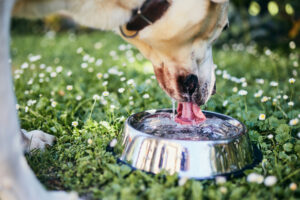
Dogs: What’s Really in Your Dog’s Water Bowl?
Dogs depend on their owners for clean drinking water, and their water bowl is something they use every day. Because dogs are often smaller than people and have shorter lifespans, their exposure to certain contaminants deserves consideration even when the water looks perfectly clear. Even if your dog seems perfectly healthy, contaminants in drinking water may not produce obvious signs right away.
Depending on the contaminant and the amount consumed, exposure through drinking water may contribute to health risks over time. Heavy metals are a particular concern because some can accumulate in the body, and contaminated water can be one potential source of exposure.
A 2025 pilot study published in PLOS Water examined drinking water samples from 178 dogs living in homes without municipal water supplies. Researchers detected the metals they tested for in the samples, and some samples contained certain metals above applicable EPA maximum contaminant levels or health guidance levels.*
The study found an association between reverse osmosis (RO) water treatment and fewer reported health conditions in dogs. This highlights why water quality deserves attention when considering your dog’s everyday environment.
The research highlights an important point: testing your well water can reveal potential contaminants that you might otherwise overlook.
*NOTE: This was an observational study, so it cannot establish that RO water prevents disease. More research is needed to confirm the relationship between drinking water treatment and canine health.
Cats: Don’t Forget Your Feline Family Members
Cats depend on fresh drinking water every day, and their water quality deserves the same attention as their food. Even when a cat appears healthy, its drinking water can be a potential source of exposure to certain contaminants.
Kidney health is another important consideration for cat owners. Chronic kidney disease is common in cats, especially as they age, and maintaining access to clean, fresh water is an important part of their daily care.*
Water testing can help identify potentially harmful contaminants, including certain metals, that may be present in your home’s water supply. Heavy metals such as lead and copper can enter drinking water through natural sources or corroding plumbing. Depending on the substance and level of exposure, these contaminants may pose health risks.
If you use a pet fountain or water bowl, remember that keeping it clean is important, too. Good bowl hygiene and safe source water work together to support your pet’s everyday care.
*Note: Chronic kidney disease has many possible causes, and contaminated household well water has not been established as a general cause of the disease in cats. Water testing is still a useful way to identify potential contaminants and address avoidable environmental exposures.
Can Reverse Osmosis Help Provide Cleaner Drinking Water for Pets?
If testing identifies contaminants in your water, the right treatment system can help address the specific problem. One option worth discussing is a reverse osmosis system.
Reverse osmosis uses a semipermeable membrane to reduce many dissolved contaminants. Depending on the system and its certification, it can reduce certain metals and other substances that may be present in drinking water.
For pet owners, an RO system can provide an additional source of treated water for drinking bowls, fountains, and other household uses connected to the system.
The right treatment depends on what’s actually in your water. RO is not designed to address every possible water-quality problem. Below you can learn more about bacterial contamination, which requires a different treatment approach.
At H2O Equipment Company, we can help Connecticut homeowners explore water treatment options suited to their water quality concerns and household needs.
What If Your Well Water Tests Positive for Coliform Bacteria?
If your well water tests positive for coliform bacteria, it’s important to identify the source of contamination and take steps to protect your household and pets.
Well Chlorination and Well Inspections
Well chlorination is often the first step we recommend to address bacterial contamination. It’s also important to inspect your well for potential entry points. A properly fitted, bug-proof well cap helps prevent insects and small animals from entering your well and potentially introducing bacteria into your water supply.
After chlorination, your water should be retested to confirm the treatment was effective. If contamination persists or returns, additional treatment may be necessary.
Whole-House UV Water Treatment
For homeowners seeking ongoing protection against bacteria, a whole-house ultraviolet (UV) water treatment system can provide an additional layer of protection. UV light inactivates bacteria, including E. coli, as water enters your home, helping treat water throughout your plumbing system.
At H2O Equipment Company, we can help Connecticut homeowners explore the right solution for their well, from chlorination and well inspections to UV systems for continuous disinfection.
Contact H2O Equipment Company to discuss your well water testing and treatment options – and help protect every member of your family, pets included.
How Often Should You Test Your Connecticut Well Water?
If your home uses a private well, regular testing is one of the best ways to understand your water quality. The CDC recommends testing private well water at least once a year for total coliform bacteria, nitrates, total dissolved solids, and pH. Connecticut’s Department of Public Health also recommends routine testing for additional contaminants, including lead, according to its private well testing guidance.
You should also consider testing after well or plumbing repairs, flooding, or noticeable changes in your water’s taste, smell, color, or clarity. Remember that some harmful contaminants have no noticeable effect on the appearance or taste of water.
A water test can help you determine whether your supply needs treatment and which solutions make the most sense for your home and pets.
Protect Your Whole Family – Pets Included
Your pets rely on you to make decisions about their food, environment, and everyday care. Safe drinking water is another important part of that responsibility.
Contact H2O Equipment Company to discuss well water testing and treatment options. Whether you’re concerned about coliform bacteria, heavy metals, or improving the quality of the water your pets drink every day, we can help you explore the next steps toward cleaner, safer water for your household.
Because protecting your family means looking out for every member of it.
Image Courtesy: Shutterstock/Jaromir Chalabala